Perú y sus políticas hacia las pruebas en animales
En Perú, cada vez más personas han comenzado a mostrar interés por la protección animal. En este contexto, diversas organizaciones han desarrollado un rol clave en la defensa de los derechos de los animales, junto a funcionarios públicos que han impulsado iniciativas legislativas en esta materia. A esto se suman creadores de contenido que promueven estilos de vida más conscientes y respetuosos con otros seres sintientes, así como personas de la sociedad civil que también han contribuido a visibilizar esta causa.
Esta empatía y mayor conciencia por la protección animal, que se ha ido consolidando a lo largo de los años, ha impulsado un aumento en el consumo consciente. En este escenario, han ganado relevancia los productos naturales, reciclables y libres de crueldad animal, incluyendo cosméticos y artículos de belleza. Sin embargo, pese a la creciente disponibilidad de alternativas cruelty free en el mercado peruano, la regulación del sector cosmético aún permite el testeo en animales como parte de las evaluaciones de seguridad de los productos, sus ingredientes o sus combinaciones.
Estado actual de la legislación del Perú con relación a los animales
Actualmente, Perú cuenta con la Ley N° 30407 de Protección y Bienestar Animal. Esta normativa establece las condiciones necesarias para resguardar a las distintas especies, tanto vertebrados domésticos como silvestres, y las reconoce como seres sensibles, señalando que deben recibir un trato adecuado por parte de las personas y vivir en armonía con su entorno.
Asimismo, la ley incorpora el principio de armonización con el derecho internacional, el cual establece que el Estado debe mantener un marco normativo actualizado en favor del bienestar y la protección animal, en concordancia con acuerdos, tratados y convenios internacionales vigentes. En este sentido, se plantea la necesidad de que la legislación nacional continúe avanzando y adecuándose a los estándares internacionales en materia de protección animal.
Imagen por Te Protejo
Ley de protección y bienestar animal y su alcance en experimentación, investigación y docencia
La ley también aborda el uso de animales en actividades de experimentación, investigación y docencia, estableciendo que el Ministerio de Agricultura y Riego, en su rol de ente rector, es el encargado de regular, mediante normas complementarias, la protección y el bienestar animal en estos contextos. Asimismo, trabaja en conjunto con el Ministerio del Ambiente en la definición de lineamientos relacionados con la fauna silvestre.
La normativa establece que estas actividades solo pueden realizarse en centros de educación superior o instituciones especializadas, tanto públicas como privadas, que cuenten con comités de ética en bienestar animal. Además, se señala que el uso de animales debe limitarse a situaciones en las que no existan métodos alternativos que permitan obtener los mismos resultados, procurando siempre minimizar el dolor y el sufrimiento.

Imagen por Depositphotos
¿Está prohibido el testeo de productos cosméticos en animales en el país?
Si bien la normativa vigente establece como prohibición general la realización de experimentos e investigaciones con animales vivos que puedan ocasionarles sufrimiento innecesario, lesiones o la muerte, contempla excepciones en aquellos casos en que estas prácticas resulten imprescindibles para el avance de la ciencia y no puedan ser reemplazadas por métodos alternativos.
En este contexto, aunque la ley menciona alternativas como el uso de cultivos celulares, tejidos, métodos computacionales u otros procedimientos, no existe una regulación específica que aplique de manera directa esta prohibición a las pruebas de seguridad y eficacia de productos cosméticos, sus ingredientes o combinaciones.

Imagen por Depositphotos
Entidad encargada de la autorización de comercialización de productos cosméticos
En Perú, el sector cosmético está regulado por la Dirección General de Medicamentos, Insumos y Drogas (DIGEMID), organismo dependiente del Ministerio de Salud. Esta entidad establece una serie de requisitos para la fabricación y comercialización de productos cosméticos, entre los que se incluyen evaluaciones de seguridad. Sin embargo, la normativa no exige que estas pruebas se realicen en animales, pero tampoco prohíbe explícitamente su uso, lo que deja un vacío regulatorio en esta materia.
Por otra parte, diversos países han avanzado en la prohibición del testeo en animales para cosméticos, incorporando métodos alternativos que resultan más modernos, eficaces y seguros para las personas. Este tipo de avances ha impulsado cambios en las políticas regulatorias a nivel internacional, marcando una tendencia hacia la eliminación progresiva de estas prácticas.
Asimismo, aunque aún existen países que permiten la realización de pruebas en animales, como China, Perú, Argentina y Estados Unidos, esta es una tendencia que ha comenzado a cambiar en los últimos años. En el caso de China, por ejemplo, anteriormente se exigía que ciertos productos cosméticos fueran testeados en animales. Sin embargo, su regulación ha evolucionado, permitiendo la comercialización de algunos productos importados, como champú, gel de baño, lápiz labial, lociones y maquillaje, que han sido evaluados mediante métodos alternativos, siempre que cumplan con determinados requisitos.
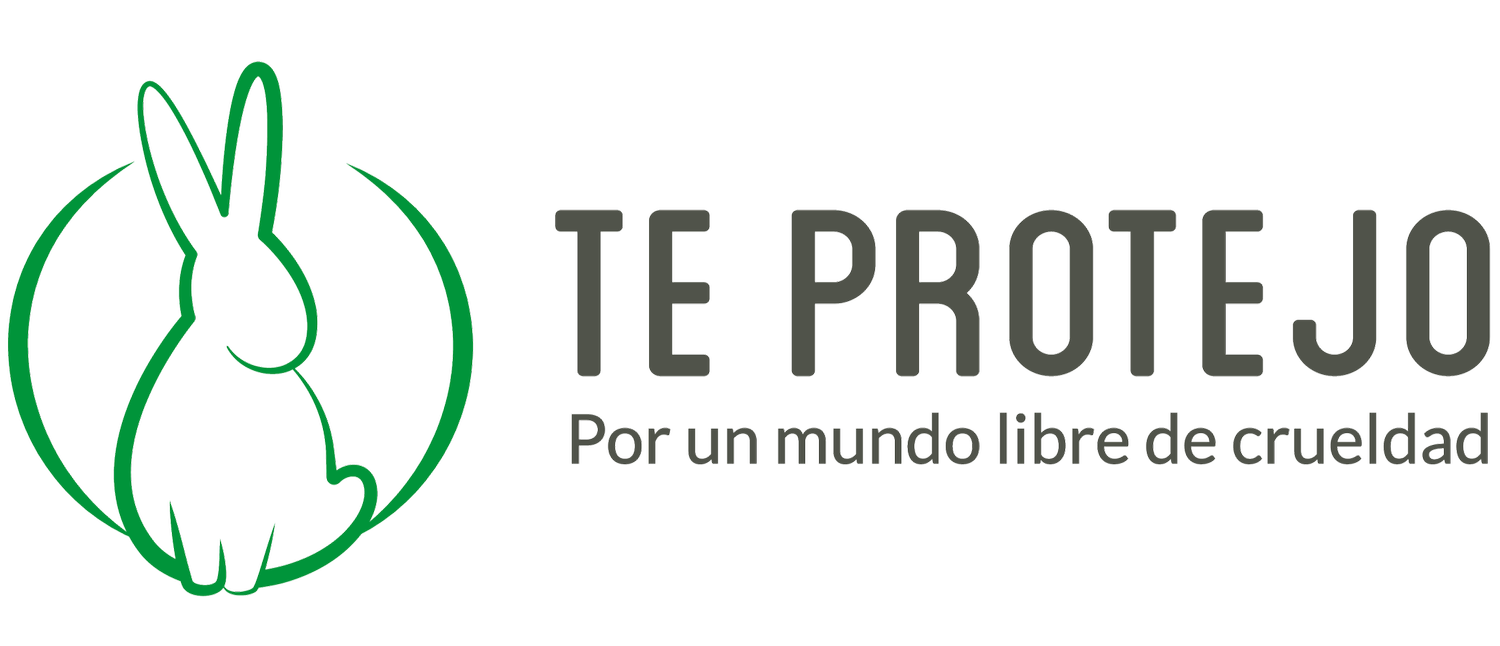
En el caso de Perú, el país ha comenzado a dar pasos hacia una posible alineación con estas tendencias internacionales. En este contexto, se ha presentado el proyecto de Ley N° 7688/2023-CR, que propone modificar la Ley N° 30407 de Protección y Bienestar Animal para prohibir el testeo en animales en cosmética. De ser aprobado, este proyecto permitiría avanzar tanto en la protección de los animales como en el acceso a productos desarrollados mediante métodos alternativos más modernos y seguros.
Este avance no solo implicaría evitar que animales sean sometidos a procedimientos que pueden causarles sufrimiento y muerte, sino que también favorecería el desarrollo y uso de tecnologías más éticas en la industria cosmética, beneficiando tanto a los animales como a las personas consumidoras.
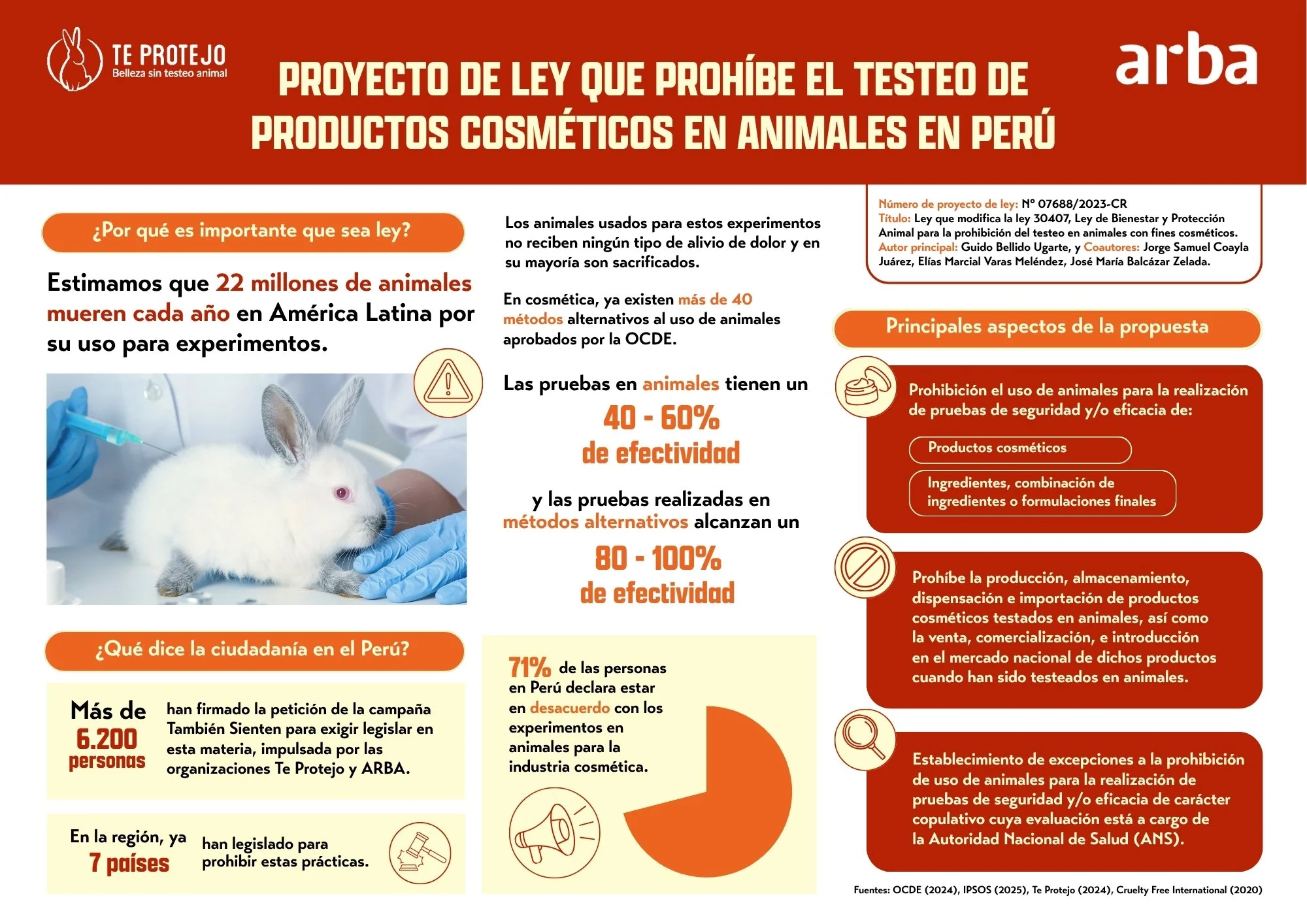
Imagen por Te Protejo
Si quieres conocer más sobre esta iniciativa, puedes informarte y apoyar la campaña “También Sienten”, que busca poner fin al testeo en animales en el país, firmando la petición y compartiendo esta información con otras personas.