Lo que debes saber sobre la ley que prohíbe las pruebas en animales para cosméticos en Chile
El viernes 26 de enero de 2024 se publicó en el Diario Oficial la Ley N° 21.646, que modifica el Código Sanitario para prohibir las pruebas en animales en productos cosméticos, así como la importación y comercialización de aquellos que hayan sido testeados en animales. En este artículo revisamos los principales cambios que introduce esta normativa, sus elementos clave y los beneficios asociados a su implementación.
Las pruebas en animales han sido una práctica extendida en la industria cosmética. Sin embargo, en los últimos años, distintos países han avanzado en su prohibición, impulsando marcos regulatorios que promueven métodos alternativos. Este es el caso de países como México, Australia, Nueva Zelanda y Corea del Sur, entre otros.
Imagen por Te Protejo
En Chile, este proceso comenzó en diciembre de 2020 con la presentación del boletín 13.966-11 por parte de Te Protejo y Humane World for Animals, con el apoyo de diputadas y diputados. La iniciativa buscaba prohibir el testeo en animales para demostrar la seguridad de productos cosméticos, así como la venta, importación y comercialización de productos cosméticos, de higiene y odorización personal que hubiesen sido testeados en animales.
Tras años de tramitación legislativa, el 20 de diciembre de 2023 el proyecto fue aprobado por unanimidad en el Senado, marcando un hito para la protección animal en el país y quedando a la espera de su publicación en el Diario Oficial, lo que finalmente se concretó en enero de 2024.
Durante la mañana del viernes 26 de enero de 2024 se publicó en el Diario Oficial la Ley N° 21.646, que prohíbe la experimentación en animales en productos cosméticos en Chile. Esta normativa establece que entrará en vigor doce meses después de su publicación, por lo que la prohibición será aplicable a todos los productos cosméticos, de higiene y odorización personal que ingresen al mercado, se comercialicen o se importen una vez que la ley esté vigente. En este sentido, los productos que ya se encuentran en circulación no se ven afectados, ya que la ley no tiene carácter retroactivo. Con el objetivo de comprender sus alcances, a continuación se presentan las principales modificaciones que introduce esta norma.
La Ley N° 21.646 establece que:
Se prohíbe el uso de animales para la realización de pruebas de seguridad y eficacia en productos cosméticos, de higiene y odorización personal. Asimismo, se prohíbe la venta, comercialización, importación e introducción en el mercado nacional de estos productos cuando hayan sido testeados en animales, incluyendo sus ingredientes, combinaciones o formulaciones finales.
Además, para garantizar la seguridad y eficacia de estos productos, se exige el uso de métodos alternativos que no involucren animales. Estos métodos deben ser reconocidos por el Instituto de Salud Pública o por la Organización para la Cooperación y el Desarrollo Económico. Esta disposición tampoco tiene carácter retroactivo, por lo que solo se aplicará a los productos que ingresen al mercado con posterioridad a la entrada en vigor de la ley.
No obstante, al igual que otras legislaciones, esta ley contempla ciertas excepciones. El uso de animales podrá permitirse de manera excepcional para la realización de pruebas de seguridad y eficacia, únicamente en aquellos casos en que no existan métodos alternativos reconocidos por el Instituto de Salud Pública o por la Organización para la Cooperación y el Desarrollo Económico que permitan evaluar dichos parámetros. Además, esta excepción aplica cuando los ingredientes estén sujetos a restricciones en su concentración para uso cosmético y no exista un sustituto disponible para su formulación.
Por otra parte, la normativa establece que no se podrá utilizar nueva evidencia científica derivada de pruebas en animales para demostrar la seguridad o eficacia de productos cosméticos, de higiene y odorización personal, ni de sus ingredientes, combinaciones o formulaciones finales. Esta restricción solo admite excepciones en casos específicos, como cuando no existan métodos alternativos reconocidos para evaluar la seguridad de un ingrediente, cuando exista evidencia documentada de que dichas pruebas no fueron realizadas con fines cosméticos, o cuando los datos provengan de ensayos en animales previamente autorizados de manera excepcional.
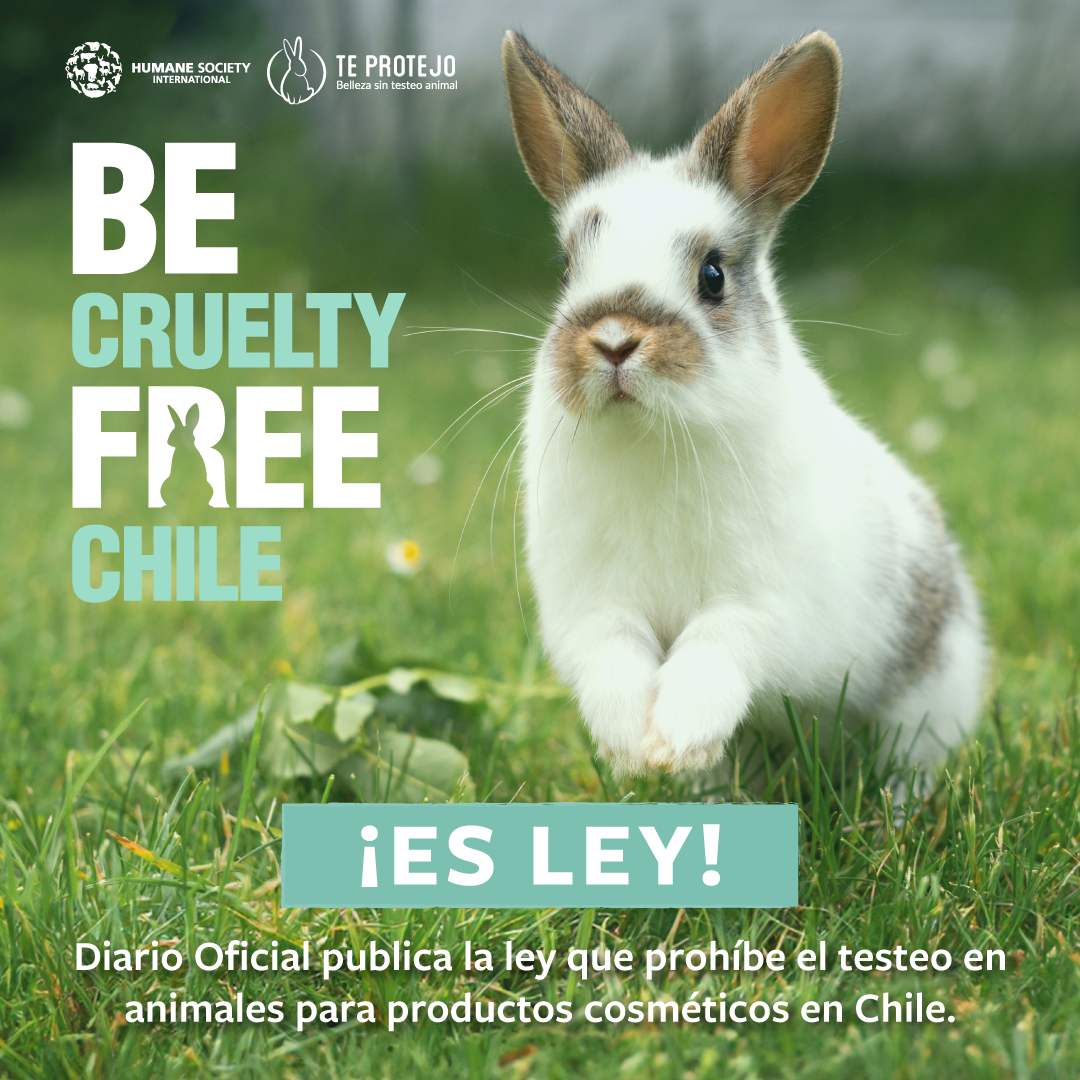
Imagen por Te Protejo
Sanciones ante el incumplimiento de la ley
Como en toda normativa, el incumplimiento de las disposiciones establecidas en esta ley contempla diversas sanciones, las cuales se rigen por el Código Sanitario, el Código Penal y la Ley sobre Protección de los Derechos de los Consumidores.
De acuerdo con lo establecido en el Título III del Libro Décimo del Código Sanitario, quienes infrinjan esta normativa podrán enfrentar multas, así como la clausura de establecimientos, recintos o lugares donde se haya cometido la infracción. Además, se podrá cancelar la autorización de funcionamiento o los permisos otorgados, suspender la distribución y uso de los productos involucrados, y proceder al retiro, decomiso, destrucción o desnaturalización de estos.
Por otra parte, según lo dispuesto en el artículo 291 bis del Código Penal, el uso de animales para pruebas de seguridad, en contravención de la ley, puede ser considerado como maltrato animal, lo que permite que estos hechos sean denunciados ante el Ministerio Público.
Uso del etiquetado “libre de crueldad”
Imagen por Te Protejo
El artículo 24 de la Ley N° 19.496, que establece normas sobre protección de los derechos de las personas consumidoras, sanciona el uso indebido de etiquetas como “cruelty free” o “libre de crueldad”. En este contexto, la Ley N° 21.646 permite que los fabricantes utilicen estos términos en envases o envoltorios únicamente cuando puedan acreditar que el producto cosmético, sus ingredientes, combinaciones o formulaciones finales no han sido testeados en animales.
Sin embargo, no podrán utilizar este tipo de etiquetado si el producto o sus componentes han sido sometidos a pruebas en animales con posterioridad a la entrada en vigencia de la ley, o si el fabricante se basa en datos obtenidos a partir de este tipo de ensayos para demostrar su seguridad o eficacia.
Es importante considerar que esta normativa regula únicamente lo que ocurre dentro del territorio nacional. Por ello, aunque en Chile se prohíba el testeo en animales para cosméticos, algunas marcas podrían realizar estas pruebas en el extranjero. En este escenario, la certificación cruelty free continúa siendo una herramienta clave para que las personas consumidoras puedan identificar productos que no han sido testeados en animales en ninguna etapa de su desarrollo.
La implementación de esta ley representa un avance significativo para la protección animal, ya que contribuye a reducir el uso de animales en la industria cosmética y promueve la adopción de métodos alternativos más éticos y seguros.
En este contexto, informarse y elegir productos que cuenten con certificación vigente se vuelve fundamental para asegurar un consumo realmente libre de crueldad animal. Para conocer alternativas disponibles, puedes revisar el listado de marcas cruelty free certificadas en Te Protejo y otras certificadoras oficiales.