El camino para que las pruebas de cosméticos en animales se prohibiera en Chile
El 27 de enero de 2025, entró en vigencia la Ley 21.646, que prohíbe la experimentación en animales de productos cosméticos, sus ingredientes o combinaciones de estos en Chile. La norma también regula la introducción, importación, venta y comercialización de productos cosméticos testeados en animales, marcando un hito en la protección de los animales y el impulso de una industria de belleza más ética y cruelty free.
La normativa fue aprobada por unanimidad a finales de 2023 por la sala del Senado y publicada en el Diario Oficial en enero de 2024. Este es un gran logro para los derechos de los animales en Chile, convirtiéndose en la tercera ley de protección animal que se dicta en el país en los últimos 15 años.
Los inicios de este proyecto de ley

Imagen por Te Protejo
Te Protejo, fundada en 2012 como organización sin fines de lucro, comenzó con la misión de promover productos cosméticos libres de crueldad animal. Pronto se hizo evidente que concientizar a los consumidores y trabajar con empresas no era suficiente: también era necesario impulsar leyes que prohibieran el testeo de cosméticos en animales, siguiendo el ejemplo de iniciativas exitosas en la Unión Europea.
En 2016, el equipo de Te Protejo comenzó el trabajo legislativo en Chile para presentar un proyecto de ley que prohibiera el testeo de productos cosméticos en animales. Redactaron el texto del boletín y dialogaron con distintos parlamentarios para identificar quiénes podrían patrocinar la iniciativa. Paralelamente, se mantuvieron reuniones con actores de la industria cosmética y con el Instituto de Salud Pública, logrando que todo el ecosistema de la industria cosmética se alineará a la iniciativa, y se trabajará de manera conjunta hacia este objetivo.
Presentación en la Cámara de Diputadas y Diputados
Luego de años de trabajo, en 2020 se presentó el boletín 13.966-11, cuyo autor fue el diputado Vlado Mirosevic, y que se fusionó con los boletines 14.1932-11 y 14.180-11, también relacionados con la temática. A pesar de contar con un apoyo transversal, fue recién a finales de 2021 que el proyecto se discutió en la Sala de la Cámara de Diputadas y Diputados, siendo aprobado en general y en particular con 113 votos a favor, 0 en contra y 2 abstenciones.
Tramitación en el Senado
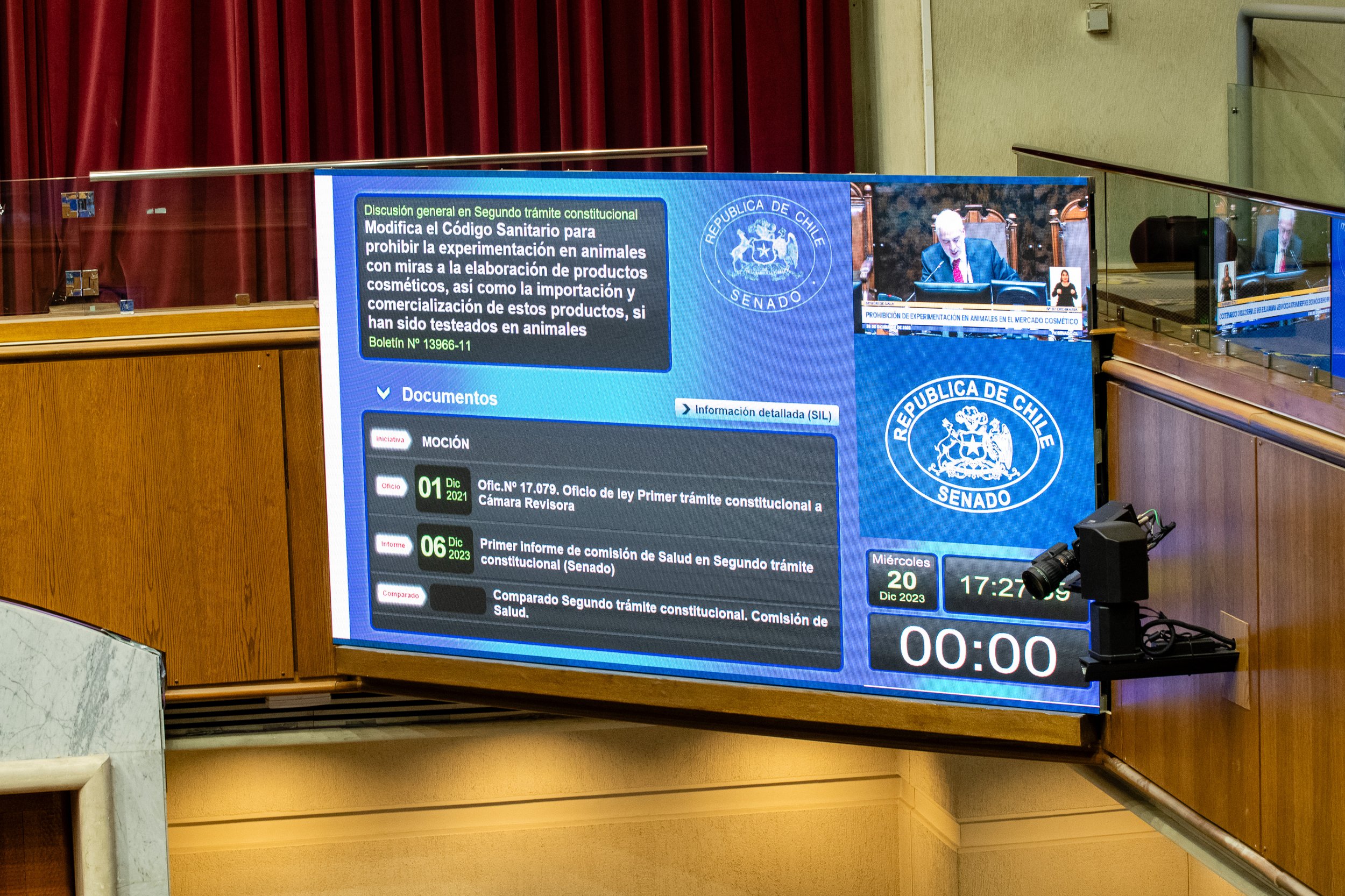
Imagen por Depositphotos
Tras su aprobación en la Cámara, el proyecto pasó al Senado para su segundo trámite constitucional. Durante dos años, su avance se vio detenido, a pesar de los esfuerzos de Te Protejo, que sostuvo reuniones con integrantes de la Comisión de Salud para impulsar su revisión. En ese período, las prioridades legislativas estuvieron enfocadas en la pandemia, la reforma del sistema público de salud y las ISAPRES.
A pesar de estas dificultades, el equipo de Incidencia de Te Protejo continuó insistiendo y reuniéndose con la Comisión del Senado, logrando el apoyo del congresista Juan Luis Castro, quien puso el proyecto en tabla. Finalmente, el 20 de diciembre de 2023, el proyecto se discutió y votó en la Sala del Senado, siendo aprobado por 26 votos a favor, 0 en contra y 1 abstención, con elogios de las autoridades sobre su importancia y necesidad.
Promulgación y apoyo
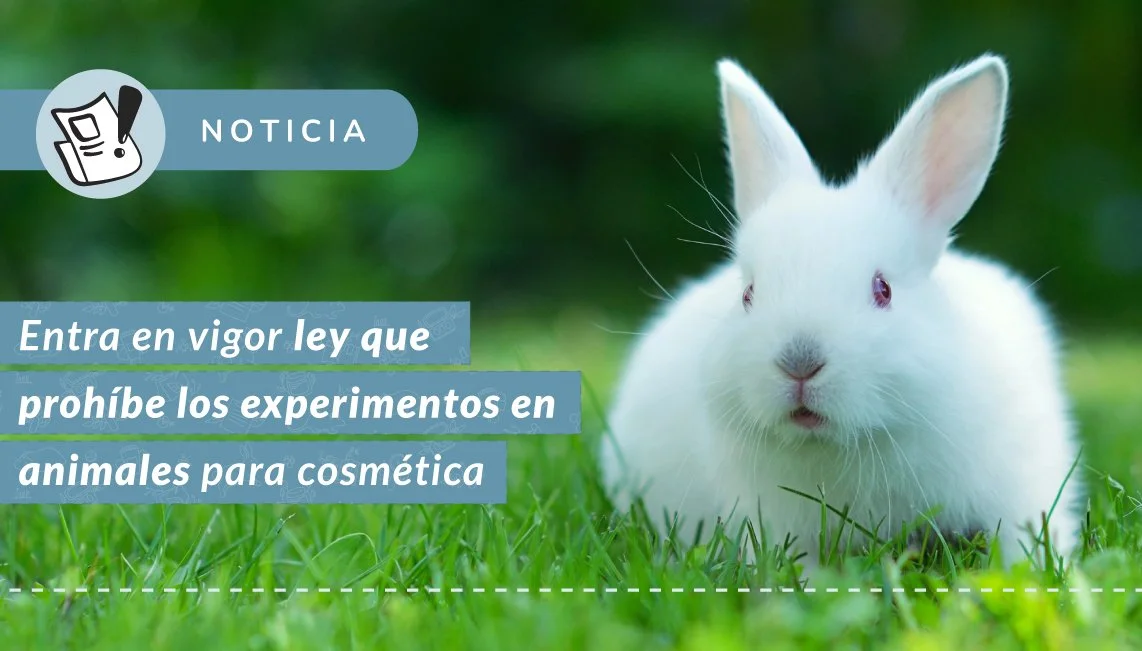
Imagen por Te Protejo
Tras su aprobación por el Congreso, el proyecto de ley se envió al presidente de la República, Gabriel Boric, quien dictó el acto promulgatorio publicado en el Diario Oficial el 26 de enero de 2024. A partir de esa fecha, comenzó la cuenta regresiva para la entrada en vigor de la Ley 21.646, fijando un plazo de un año para que la industria cosmética pudiera adaptar sus procesos a esta nueva normativa.
Durante todo el proceso de tramitación, fue clave el respaldo de la Cámara de la Industria Cosmética de Chile, con quienes Te Protejo trabajó estrechamente. La organización los acompañó en las comisiones de Salud de la Cámara de Diputadas y Diputados y del Senado, asegurando que sus comentarios y apoyo fueran escuchados en cada instancia del proyecto, fortaleciendo así la construcción de esta prohibición histórica.
Con la entrada en vigencia de la Ley 21.646, Chile se convierte en un referente regional en la protección de los animales frente a la experimentación cosmética. Este logro es fruto del trabajo constante de Te Protejo, del apoyo de la industria y del compromiso de la ciudadanía, demostrando que la combinación de legislación, concientización y colaboración puede generar cambios reales. Hoy, la industria cosmética chilena avanza hacia un modelo más ético, sostenible y cruelty free, marcando un precedente inspirador para otros países de la región.
En otros países, como Perú, estos procesos continúan en desarrollo, donde la participación ciudadana permite avanzar en la prohibición del testeo en animales y fortalecer estándares más éticos en la industria.